
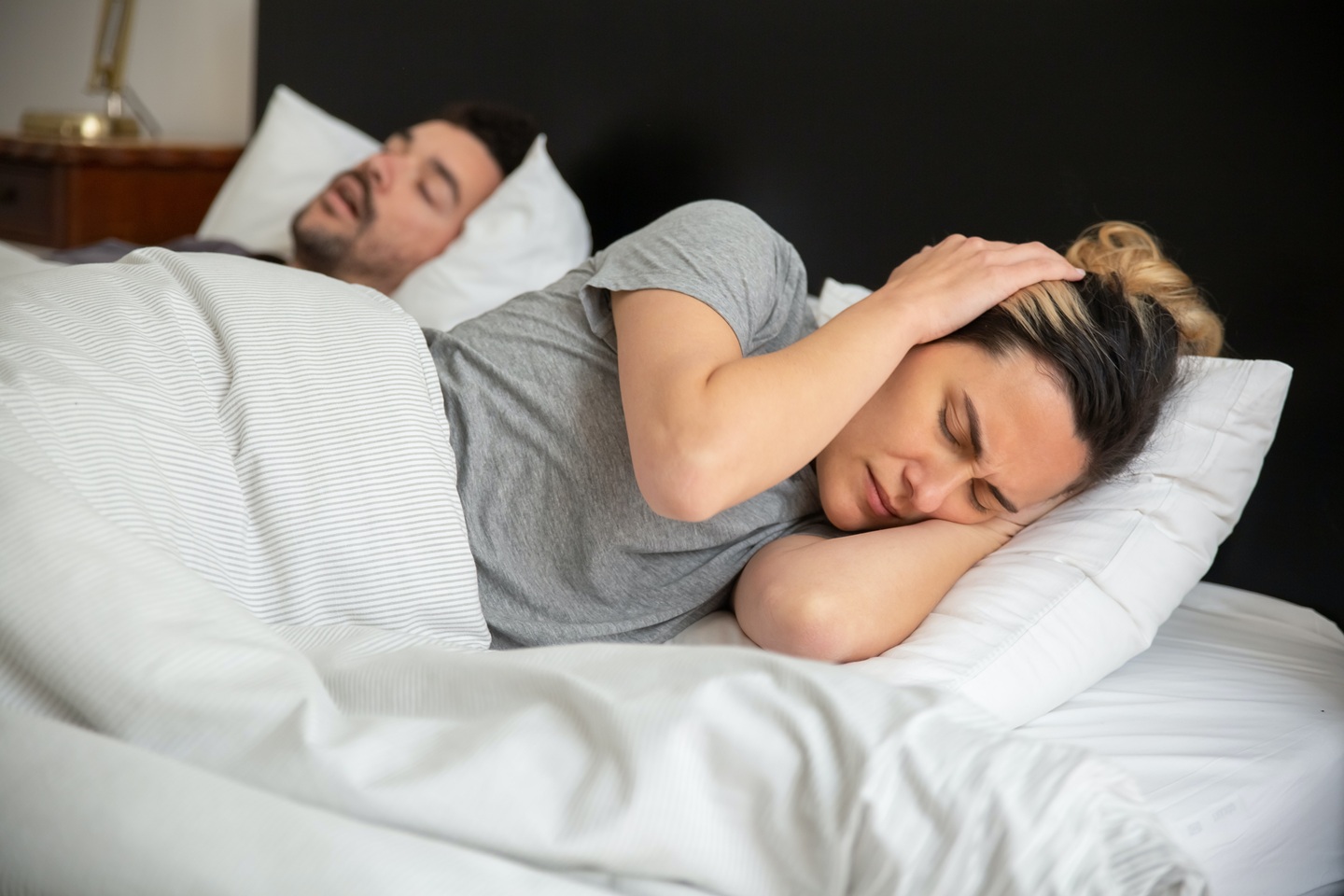
That nightly rumble coming from your side of the bed isn’t just an annoyance for your partner. It may be a warning sign that your body is fighting for air every time you try to rest.
The Hidden Cost of Snoring on Your Sleep Quality
Doesn’t snoring mean I’m sleeping deeply?
It’s one of the most common misconceptions about sleep. Loud, regular snoring is often interpreted as evidence of a person being “out cold,” but the science tells a very different story.
Snoring happens when air can’t move freely through your nose and throat during sleep. The tissues around your airway vibrate as the air squeezes past, producing that familiar sound. Instead of indicating restorative rest, snoring is your body announcing that breathing has become a struggle (Stuck et al., 2004).
Research has repeatedly demonstrated that habitual snorers get less of the sleep that actually matters, especially slow-wave (deep) sleep and REM sleep. These are the stages where your brain consolidates memories, your muscles recover, and your emotions get processed (Kohler et al., 2008). You can spend a full eight hours in bed and still wake up exhausted because the quality of those hours was compromised.
What is actually happening inside your body while you snore?
Each time your airway narrows or closes off, your brain detects a dip in oxygen levels. To protect you, it briefly nudges you toward wakefulness, usually so subtly that you have no memory of it the next morning. But that nudge is enough to yank you out of deep sleep.
These mini-awakenings can occur dozens, sometimes hundreds, of times each night. The result is something sleep scientists call sleep fragmentation: a chronic interruption of the natural rhythm your body needs (Berry et al., 2012).
The fallout is real and measurable. Fragmented sleep is linked to slower thinking, poor focus, mood swings, and a weaker immune response. One review in Sleep Medicine Reviews found that even mild fragmentation, without any full-blown apnea events, was enough to noticeably impair next-day cognitive performance (Bonnet & Arand, 2007).
Where does snoring end and sleep apnea begin?
Snoring on its own doesn’t automatically mean you have sleep apnea, but nearly everyone with obstructive sleep apnea (OSA) is a snorer. OSA is the condition in which your airway collapses repeatedly during sleep, halting your breathing for ten seconds or more at a time.
The American Academy of Sleep Medicine estimates that roughly one in four adults between 30 and 70 has OSA, and habitual snoring is the most reliable red flag (Peppard et al., 2013). The transition from simple snoring to sleep apnea often happens so slowly that years can pass before a diagnosis is made.
What separates ordinary snoring from OSA comes down to severity and consequence. Primary snoring is mostly a noise problem with some sleep disruption. OSA, on the other hand, causes drops in blood oxygen, persistent fragmentation, and long-term health risks that include high blood pressure, heart disease, and type 2 diabetes (Punjabi, 2008).
Can someone else’s snoring hurt your health?
Yes, and it’s a side of the conversation that rarely gets enough attention.
Partners of loud snorers lose around an hour of sleep every night, according to research from the Mayo Clinic Sleep Disorders Center (Beninati et al., 1999). Multiply that over a year and you’re looking at hundreds of hours of stolen rest. The health effects of that kind of sleep debt show up in nearly the same ways for the partner as they do for the snorer.
What habits are making your snoring worse?
A handful of everyday choices can intensify snoring significantly, and most of them can be adjusted.
Alcohol acts as a muscle relaxant, including on the muscles that keep your throat open. Even a drink or two within a few hours of bedtime can measurably worsen both snoring and overall sleep quality (Scrima et al., 1982).
Extra weight, particularly around the neck and upper airway, increases the chance that soft tissue will collapse inward during sleep. Gaining just 10 percent of your body weight has been associated with a six-fold jump in the risk of developing moderate-to-severe OSA (Peppard et al., 2000).
Back sleeping lets gravity pull your tongue and soft palate toward the back of your throat, narrowing the airway. Shifting to your side often makes a noticeable difference.
Nasal congestion, whether from allergies, a cold, or structural issues like a deviated septum, forces you to breathe through your mouth. That extra airflow turbulence is a major contributor to throat vibration.
When is it time to stop dismissing your snoring?
Snoring deserves a closer look when it happens most nights, is loud enough to bother others, or comes paired with any of these warning signs:
- Waking up gasping, choking, or short of breath
- Feeling drained during the day no matter how long you slept
- Headaches that show up in the morning
- Trouble concentrating or holding onto new information
- A partner noticing that you stop breathing during the night
A formal sleep study, either at a clinic or with an at-home testing device, can tell you whether OSA is in play and how serious it is. Catching it early matters: people with untreated moderate-to-severe OSA face roughly two to three times the risk of major cardiovascular events compared to those without it (Marin et al., 2005).
What treatments actually move the needle?
The right treatment depends on what’s causing the snoring and how disruptive it has become. The good news is that there are effective options at every level.
Lifestyle adjustments are the natural starting point for mild cases. Losing weight, sleeping on your side, and cutting back on alcohol can deliver real results. Dropping just 5 to 10 percent of your body weight has been shown to substantially reduce both snoring and apnea events (Johansson et al., 2009).
CPAP therapy remains the most effective treatment for moderate-to-severe OSA. It uses a small machine to deliver a steady stream of pressurized air through a mask, keeping the airway open all night. Patients who stick with CPAP consistently see major improvements in sleep quality, daytime alertness, and heart health (Giles et al., 2006).
Oral appliance therapy is a quieter, more comfortable alternative that works especially well for mild-to-moderate OSA. A custom-fitted device, similar to a sports mouthguard, gently shifts the lower jaw forward to keep the airway open. It’s often the preferred option for patients who can’t tolerate a CPAP mask (Ramar et al., 2015).
Surgical options, including uvulopalatopharyngoplasty (UPPP) and newer minimally invasive procedures, may be the right call when anatomical features are the primary cause of the obstruction.
What does life look like once snoring is under control?
People who treat their snoring and underlying breathing issues tend to describe the change in similar terms:
- Waking up feeling truly rested for the first time in years
- Thinking more clearly and remembering things better
- Steadier moods and less irritability
- More natural energy, with less reliance on coffee to get through the day
- Faster recovery from exercise and physical activity
Partners benefit just as much. Quieter nights often mean both people finally get the sleep they’ve been missing, and many couples find their way back to sharing a bedroom. The ripple effect of consistent, restorative sleep reaches into work, relationships, and overall long-term health.
Better Sleep Is Closer Than You Think
If snoring is interfering with your rest or your partner’s, it’s worth a conversation with a sleep specialist or your dentist. A short evaluation can tell you whether you’re dealing with simple snoring or something that needs treatment, and either way, you’ll have a clear path forward.
Restless nights don’t have to be your normal. With the right support, deeper sleep and brighter mornings are well within reach.